बल्ब कभी तेज़ कभी धीमा, टीवी जल गया? न्यूट्रल तार की पूरी कहानीLow Voltage, Burnt TV? The Loose Neutral Story Explained
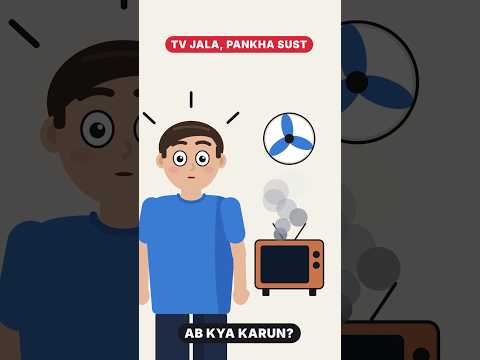
चिंटू परेशान है: बल्ब कभी तेज़ जलता है, कभी धीमा, पंखा सुस्त और आज टीवी भी जल गया। मोहल्ले में किसी का घर अंधेरा-सा, तो किसी का बल्ब फ़्यूज़। मीटर भैया कहते हैं: हर बार कसूर ओवरलोड का नहीं होता, कई बार गड़बड़ एक पतले से तार में होती है, जिसका नाम है न्यूट्रल।
1. लो वोल्टेज के आम कारण
- लाइन बहुत लंबी हो या तार पतला हो, तो आख़िरी घरों तक वोल्टेज गिर जाता है।
- कहीं जोड़ (जॉइंट) ढीला हो, तो वहाँ गर्मी बनती है और वोल्टेज गिरता है।
- ट्रांसफ़ॉर्मर पर उसकी क्षमता से ज़्यादा लोड हो।
- और एक ख़तरनाक कारण: न्यूट्रल का टूटना या ढीला होना।

2. न्यूट्रल क्या करता है?
- ट्रांसफ़ॉर्मर से तीन फ़ेज़ (R, Y, B) और एक न्यूट्रल तार निकलता है। आपके घर में एक फ़ेज़ और न्यूट्रल आता है, जिससे लगभग 230 V मिलता है।
- मोहल्ले के घर बारी-बारी से तीनों फ़ेज़ पर बाँटे जाते हैं, ताकि लोड बराबर रहे। न्यूट्रल सबका साझा "वापसी का रास्ता" है।
3. साझा न्यूट्रल टूटा तो क्या होता है?
- तीनों फ़ेज़ का लोड कभी बिल्कुल बराबर नहीं होता। न्यूट्रल सही हो तो कोई दिक्कत नहीं।
- न्यूट्रल टूटते ही हर घर का वोल्टेज इस बात पर टिक जाता है कि किस फ़ेज़ पर कितना लोड है:
- जिस फ़ेज़ पर कम लोड है, वहाँ वोल्टेज बहुत बढ़ सकता है, बुरी हालत में लगभग 400 V तक। ऐसे घरों में टीवी, चार्जर, बल्ब जल सकते हैं।
- जिस फ़ेज़ पर ज़्यादा लोड है, वहाँ वोल्टेज बहुत गिर जाता है। मोटर वाले सामान (पंखा, कूलर, पंप) गरम होकर ख़राब हो सकते हैं।
4. पहचान कैसे करें?
- बल्ब की रोशनी बार-बार तेज़-धीमी हो, ख़ासकर जब पड़ोस में कोई बड़ा सामान चालू हो।
- पड़ोसी के घर उल्टा हाल हो: आपका कम, उनका ज़्यादा।
- स्टेबलाइज़र बार-बार कट रहा हो या सामान अचानक जलने लगे।
5. क्या करें, क्या न करें
- तुरंत बड़े सामान बंद करें और मेन स्विच बंद कर दें।
- 1912 पर शिकायत करें या अपने उपकेंद्र/लाइनमैन को बताएँ। न्यूट्रल की मरम्मत विभाग का काम है।
- टूटा या लटका तार कभी न छुएँ, न ख़ुद जोड़ने की कोशिश करें।
- घर के अंदर अपना न्यूट्रल कनेक्शन और अर्थिंग किसी लाइसेंसधारी इलेक्ट्रीशियन से जँचवाएँ। वोल्टेज प्रोटेक्शन वाला स्टेबलाइज़र/MCB भी मदद करता है।
याद रखें: यह जानकारी केवल समझाने के लिए है। बिजली के तार ख़ुद न छुएँ।
Chintu is worried: the bulb glows bright one moment and dim the next, the fan is slow and today the TV burnt out. In the lane, one house is half-dark while another's bulb has fused. Meter Bhaiya says: it is not always overload. Sometimes the trouble is in one thin wire, the neutral.
1. Common causes of low voltage
- A very long line or a thin conductor makes voltage drop by the time it reaches the last houses.
- A loose joint heats up and drops voltage.
- The transformer is loaded beyond its capacity.
- And one dangerous cause: a broken or loose neutral.
2. What does the neutral do?
- The transformer gives three phases (R, Y, B) and one neutral. Your house gets one phase plus neutral, about 230 V.
- Houses in a lane are spread across the three phases in turn to keep the load balanced. The neutral is everyone's shared "return path".
3. What happens if the shared neutral breaks?
- The load on the three phases is never exactly equal. With a healthy neutral this does not matter.
- Once the neutral breaks, each house's voltage depends on how much load is on each phase:
- On the lightly loaded phase, voltage can rise sharply, in the worst case close to 400 V. TVs, chargers and bulbs in those homes can burn.
- On the heavily loaded phase, voltage drops sharply. Motor appliances (fan, cooler, pump) can overheat and fail.
4. How to spot it
- Lights keep going bright and dim, especially when a neighbour switches on a big appliance.
- Your neighbour sees the opposite: yours low, theirs high.
- The stabiliser keeps tripping, or appliances suddenly start failing.
5. What to do, what not to do
- Switch off big appliances right away and turn off the main switch.
- Complain on 1912 or tell your substation/lineman. Repairing the neutral is the department's job.
- Never touch a broken or hanging wire, and do not try to join it yourself.
- Get the neutral connection and earthing inside your house checked by a licensed electrician. A stabiliser/MCB with voltage protection also helps.
Please note: this is for awareness only. Do not touch electrical wires yourself.
Sources
- Electrical Engineering Portal, Floating Neutral impacts in power distribution (broken neutral at transformer, LV line or service wire; voltage floats depending on load balance):
- https://electrical-engineering-portal.com/floating-neutral-impacts-in-power-distribution
- BijliBachao, What happens when neutral of your supply disconnects (single-phase houses fed alternately from R, Y, B; heavily loaded phase sees low voltage, lightly loaded sees high voltage):
- https://www.bijlibachao.com/general-tips/what-is-single-and-three-phase-supply-and-what-happens-when-neutral-of-your-supply-disconnects.html
- Caruna (Finland DSO), Identify a neutral fault - it may be life-threatening (signs: flickering lights, appliances misbehaving, equipment may break):
- https://caruna.fi/en/power-cuts/neutral-fault
- UPPCL helpline 1912