हाई-टेंशन लाइन के नीचे मकान बना सकते हैं? CEA रेगुलेशन 62, 63 और 65 की पूरी बातBuilding Under a High-Tension Line in UP? CEA Regulations 62, 63 and 65 Explained
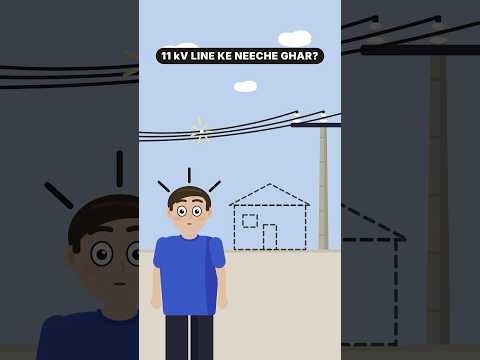
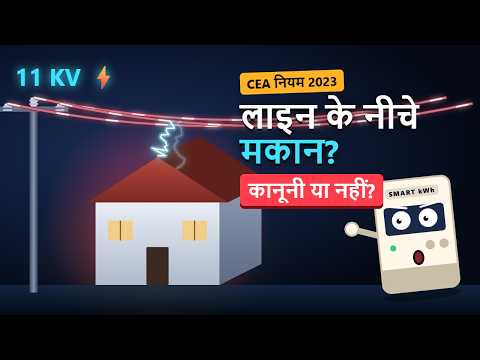
नमस्ते चौपाल वालों! सोचो, सस्ता प्लॉट मिल गया, पूरा परिवार जमा-पूँजी लगाकर घर बनवा रहा है, और छत डलते ही ऊपर से 11 kV की लाइन गुज़रती दिखी। तब पता चलता है कि प्लॉट सस्ता क्यों था! मीटर भैया चश्मा ठीक करके कहता है: "घर बाद में बनाना, पहले नियम पढ़ लो।" तो आज इसी का हिसाब खोलते हैं। (सिर्फ़ जानकारी, कोई कानूनी सलाह नहीं।)
1. सवाल तीन हैं, जवाब एक-एक करके
- क्या तारों के नीचे घर बनाना कानूनी है?
- अगर तार से थोड़ी दूरी छोड़ दी, तो क्या चलेगा?
- और अगर लाइन पहले से मौजूद है, तो इजाज़त का रास्ता क्या है?
इन तीनों का जवाब CEA (Measures relating to Safety and Electric Supply) Regulations, 2023 के रेगुलेशन 62, 63 और 65 में है। ये नियम इलेक्ट्रिसिटी एक्ट, 2003 की धारा 53 और 177 के तहत बने हैं। मामला हल्का नहीं है: बलिया में स्कूल में करंट लगने की घटना राष्ट्रीय मानवाधिकार आयोग (NHRC) तक पहुँची थी। इसलिए मज़ाक अपनी जगह, सुरक्षा अपनी जगह।
2. नियम क्या रोकते हैं?
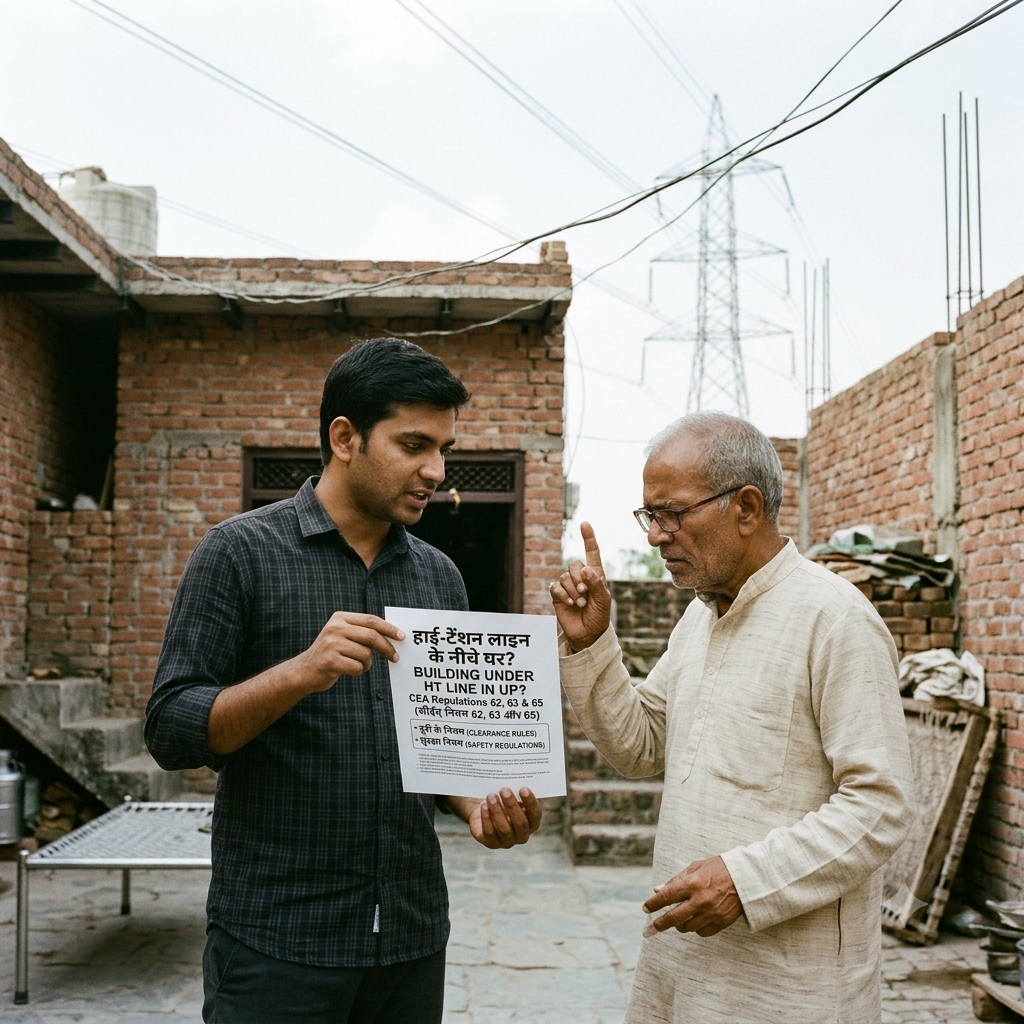
- रेगुलेशन 62: 650 वोल्ट तक की लाइनें, यानी गली-मोहल्ले की 440 V वाली सप्लाई भी। इसके मुताबिक ओवरहेड लाइन मौजूदा इमारत के ऊपर से नहीं गुज़र सकती, और मौजूदा ओवरहेड लाइन के नीचे इमारत नहीं बन सकती।
- रेगुलेशन 63: यही रोक 650 V से ऊपर की लाइनों पर भी लागू है, यानी 11 kV और 33 kV फीडर।
तार लोहे के नहीं, मौसम के हिसाब से चलते हैं: गर्मी में लटक जाते हैं (sag) और हवा में झूलते हैं। इसलिए जो दूरी कागज़ पर ठीक लगे, वह भारी लोड और तेज़ हवा में घट सकती है।
3. "कम से कम इतनी दूरी" वाली तालिका
अधिकतम झोल (sag) और हवा में झूलने को ध्यान में रखकर न्यूनतम दूरी ये बताई गई है:
33 kV से ऊपर की लाइनों के लिए हर अगले 33 kV के पायदान पर दोनों दूरियों में 0.3 मीटर और जुड़ता है।
4. "दूरी छोड़ दी, अब तो पक्का" वाली ग़लतफ़हमी
यह सबसे बड़ा चक्कर है। ऊपर की तालिका न्यूनतम है, लक्ष्य नहीं। और सिर्फ़ दूरी छोड़ देने से तारों के नीचे निर्माण जायज़ नहीं हो जाता, क्योंकि रेगुलेशन 62 और 63 ऐसे निर्माण पर सीधी रोक लगाते हैं। यानी सेफ्टी क्लीयरेंस एक चीज़ है और कानूनी अनुमति दूसरी। मीटर भैया इसे यूँ कहता है: "मास्क लगा लेने से रेड लाइट नहीं टूटती भाई!"
5. लाइन पहले से है, तो रेगुलेशन 65 का रास्ता
अगर लाइन पहले से मौजूद है और आप निर्माण करना चाहते हैं, तो रास्ता यह है:
- लिखित सूचना: जो व्यक्ति निर्माण करना चाहता है, वह बिजली सप्लायर (DISCOM) और इलेक्ट्रिकल इंस्पेक्टर को लिखित सूचना दे।
- स्केल ड्रॉइंग: सूचना के साथ प्रस्तावित इमारत का नक्शा (scale drawing) लगे।
- जाँच: अधिकारी लाइन की स्थिति, तकनीकी संभावना और ज़रूरी सुरक्षा उपाय देखते हैं।
- लाइन शिफ्टिंग: ज़रूरत पड़ने पर लाइन को हटाया या बदला जा सकता है, तय शर्तों और ख़र्च के साथ।
- प्रमाणपत्र: इलेक्ट्रिकल इंस्पेक्टर के प्रमाणन के बिना निर्माण शुरू या जारी नहीं होना चाहिए। विशेष हालात में इंस्पेक्टर पर्याप्त सुरक्षा इंतज़ाम देखकर अनुमति दे सकता है।
अहम बात यह भी है कि लाइन कब डली और मकान कब बना, इसका रिकॉर्ड मायने रखता है, और निरीक्षण में दूरी सही निकलनी चाहिए।
6. 2026 का संशोधन: घबराओ मत
CEA के 2026 के संशोधन रेगुलेशन में मुख्य रूप से बैटरी एनर्जी स्टोरेज सिस्टम (BESS) का नया अध्याय जोड़ा गया है, जो 1 अप्रैल 2027 से लागू होगा। रेगुलेशन 62, 63 और 65 में इससे कोई बदलाव नहीं हुआ है।
7. अब आप क्या करें?
- प्लॉट लेने या नक्शा बनवाने से पहले स्थानीय बिजली कार्यालय से लाइन का वोल्टेज पूछ लो।
- इमारत के सबसे ऊँचे बिंदु पर तालिका की दूरी जाँचो, और अधिकतम झोल मानकर चलो।
- प्लॉट के ऊपर से लाइन गुज़रती है, तो निर्माण से पहले रेगुलेशन 65 के तहत स्केल ड्रॉइंग के साथ सूचना दो और लिखित प्रमाणन माँगो।
- मकान बन चुका है और ऊपर से तार गुज़र रहे हैं, तो अपने सेक्शन ऑफिस में लाइन शिफ्टिंग के लिए सूचना दो।
- एक बात और: शॉर्ट्स वाले चिंटू ने तो खंभे के नीचे दुकान खोलने तक का सवाल पूछ लिया था। आप ऐसे सवाल पहले दफ़्तर से पूछ लें, तब ईंट लगवाएँ।
याद रखें: यह सिर्फ़ जानकारी है, कानूनी सलाह नहीं। नियम और संशोधन बदल सकते हैं, और हर मामले में हालात अलग होते हैं। अपने क्षेत्र के DISCOM कार्यालय और इलेक्ट्रिकल इंस्पेक्टर से लिखित जानकारी लेना ही सही रास्ता है।
Hello Chaupal! Picture this: you bought a cheap plot, the whole family put their savings into building a house, and just as the roof goes up, an 11 kV line turns out to be passing right overhead. Now you know why the plot was cheap! Meter Bhaiya adjusts his glasses: "Build later, read the rules first." So today we open this account. (Information only, no legal advice.)
1. Three questions, one by one
- Is it legal to build under overhead wires?
- If I leave a gap from the wire, is that good enough?
- And if the line was already there, what is the route to permission?
All three are answered by Regulations 62, 63 and 65 of the CEA (Measures relating to Safety and Electric Supply) Regulations, 2023, framed under Sections 53 and 177 of the Electricity Act, 2003. This is no light matter: the electrocution of a school student in Ballia reached the National Human Rights Commission (NHRC). So joke aside, safety first.
2. What do the rules prohibit?
- Regulation 62: lines up to 650 volts, which includes the 440 V street supply. An overhead line cannot cross over an existing building, and no building can be put up under an existing overhead line.
- Regulation 63: the same prohibition applies to lines above 650 V, meaning 11 kV and 33 kV feeders.
Wires are not rods, they react to weather: they sag in heat and swing in wind. So a distance that looks fine on paper can shrink under heavy load and strong wind.
3. The "at least this much" table
The minimum clearances, based on maximum sag and wind swing:
For lines above 33 kV, 0.3 m is added to both values for every additional 33 kV step.
4. The "I left the gap, now it is safe" misunderstanding
This is the biggest trap. The table gives minimums, not targets. And merely keeping the distance does not make building under the wires permissible, because Regulations 62 and 63 prohibit it outright. Safety clearance is one thing, legal permission is another. Meter Bhaiya puts it this way: "Wearing a helmet does not make jumping a red light legal, my friend!"
5. The line is already there: the Regulation 65 route
If the line already exists and you want to build, here is the path:
- Written notice: the person who wants to build gives written notice to the electricity supplier (the DISCOM) and the Electrical Inspector.
- Scale drawing: the notice must come with a scale drawing of the proposed building.
- Examination: the authorities look at the line's position, technical feasibility and the safety measures needed.
- Line shifting: where needed, the line can be shifted or realigned, on prescribed terms and costs.
- Certification: construction should not start or continue without the Electrical Inspector's certification. In special circumstances the Inspector may permit it once adequate safety arrangements are shown.
Also important: the record of when the line was laid and when the building came up matters, and the clearances must hold on inspection.
6. The 2026 amendment: no need to panic
The CEA Amendment Regulations, 2026 mainly add a new chapter on battery energy storage systems (BESS), effective 1 April 2027. Regulations 62, 63 and 65 are unchanged.
7. So what should you do?
- Before buying a plot or getting a map drawn, ask the local electricity office for the voltage of the line.
- Check the table clearances at the highest point of your planned structure, assuming maximum sag.
- If a line crosses your plot, file the Regulation 65 notice with a scale drawing before construction, and ask for the certification in writing.
- If the house is already built and wires pass over it, report it to your section office for shifting.
- One more thing: Chintu in our Short even asked whether he could open a shop under a pole! Ask such questions at the office first, and lay bricks after.
Please note: this is information only, not legal advice. Rules and amendments can change, and every case has its own facts. Taking written information from your local DISCOM office and the Electrical Inspector is the right way to go.
Sources
- Bijlibabu article:
- https://bijlibabu.com/article/building-under-a-high-tension-line-in-up-cea-regulations-62-63-and-65-decide-whether-you-can/
- (12 Nov 2026)
- CEA (Measures relating to Safety and Electric Supply) Regulations, 2023, Regulations 62, 63 and 65 (Gazette notification dated 8 June 2023):
- https://cea.nic.in/wp-content/uploads/notification/2023/06/pdf_100_183_English.pdf
- Electricity Act, 2003, Sections 53 and 177
- CEA Amendment Regulations, 2026 (mainly battery energy storage chapter; Regs 62, 63, 65 unchanged per the article)
- Note: regulation numbers and clearance figures are taken from the Bijlibabu article; please verify once against the original Gazette PDF before publishing.