क्या आपका बिजली का मीटर तेज़ भाग रहा है? सील छुए बिना घर पर दो टेस्टIs Your Meter Running Fast? Two Home Tests Without Touching the Seal
चिंटू को लगता है कि उसका मीटर तेज़ भाग रहा है। वह पेचकस और हथौड़ा लेकर मीटर की तरफ़ बढ़ता है। मीटर भैया रोकते हैं: सील को हाथ लगाया तो मामला उलटा पड़ सकता है।
1. पहले यह याद रखें
- मीटर की सील कभी न तोड़ें, न खोलें। सील या वायरिंग से छेड़छाड़ पर इलेक्ट्रिसिटी एक्ट 2003 की धारा 135 या 126 लग सकती है।
- मीटर की जाँच घर बैठे दो आसान टेस्ट से शुरू हो सकती है, बिना सील छुए।
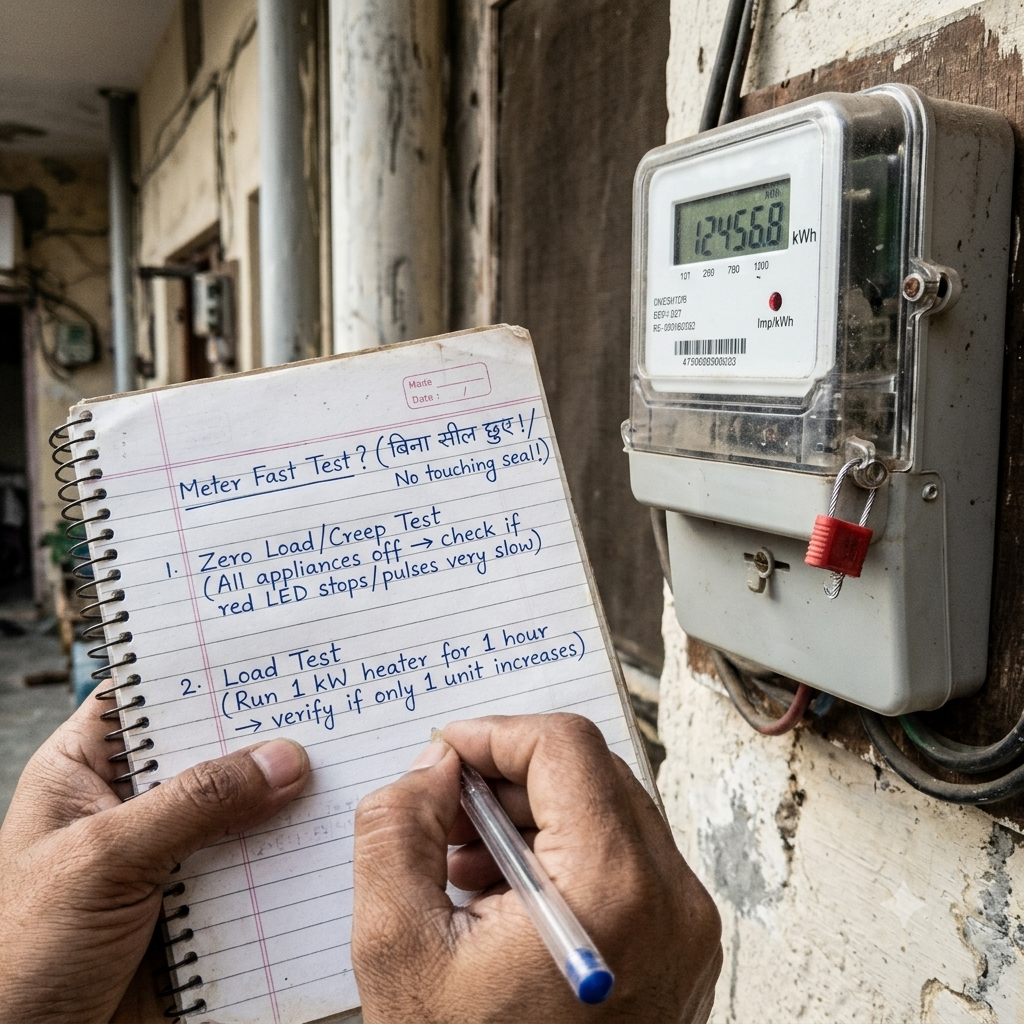
2. टेस्ट 1: ऑल-ऑफ टेस्ट
- घर का सारा लोड बंद करें: फ्रिज, राउटर, इन्वर्टर/चार्जर और स्टैंडबाय वाले सामान भी।
- अब मीटर को देखें। जब कोई सामान नहीं चल रहा, तब मीटर की रीडिंग नहीं बढ़नी चाहिए।
- रीडिंग बढ़ रही हो, तो पहले जाँच लें कि कोई सामान चुपचाप तो नहीं चल रहा।
3. टेस्ट 2: 1 kW लोड का टेस्ट
- बाकी सब बंद करके एक 1000 वाट का लोड एक घंटे चलाएँ (जैसे हीटर)। लगभग 1 यूनिट बढ़नी चाहिए।
- सामान की असली वाट वोल्टेज के साथ बदलती है, इसलिए थोड़ा मार्जिन रखें। रीडिंग बहुत ज़्यादा बढ़े (जैसे 1.1 यूनिट से ऊपर), तभी शक करें।
4. शक हो तो आगे क्या?
- अपने उपखंड कार्यालय में लिखित शिकायत दें, या 1912 पर दर्ज कराएँ, और मीटर की जाँच की माँग करें।
- सप्लाई कोड 2005 की क्लॉज़ 5.6 के अनुसार मीटर तेज़ पाए जाने पर पिछले 3 महीनों के बिल जाँच के नतीजे के हिसाब से एडजस्ट होते हैं।
- UPPCL सप्लाई कोड संशोधन की क्लॉज़ 7.7.3 के अनुसार जाँच रिपोर्ट के बाद ख़राब मीटर 15 दिन में और जला हुआ मीटर 3 दिन में बदला जाना है।
- जाँच के नतीजे तक ग़ैर-ज़रूरी लोड न बढ़ाएँ, और बिल की रक़म के बारे में उपखंड कार्यालय से लिखित जानकारी लें।
याद रखें: यह जानकारी केवल समझाने के लिए है, कानूनी सलाह नहीं। घर पर किया गया टेस्ट सिर्फ़ अंदाज़ा देता है; असली फ़ैसला विभाग की चेक मीटर जाँच से होता है।
Chintu feels his meter is running fast. He heads for the meter with a screwdriver and a hammer. Meter Bhaiya stops him: touching the seal can turn the case against you.
1. Remember first
- Never break or open the meter seal. Tampering with a seal or the wiring can attract Section 135 or 126 of the Electricity Act 2003.
- You can begin with two easy tests at home, without touching the seal.
2. Test 1: the all-off test
- Switch off every load in the house: fridge, router, inverter/charger and anything on standby.
- Now watch the meter. With nothing running, the reading should not move.
- If it moves, first check whether some appliance is quietly running.
3. Test 2: the 1 kW test
- With everything else off, run one 1000 W load for an hour (a heater, say). The meter should add about 1 unit.
- The real wattage of an appliance changes with voltage, so allow some margin. Suspect only if the reading rises well beyond that (for example above 1.1 units).
4. If you still suspect it
- Give a written complaint at your sub-division office, or register it on 1912, and ask for the meter to be tested.
- Under Clause 5.6 of the Supply Code 2005, if the meter is found fast, the bills of the previous 3 months are adjusted according to the test result.
- Under Clause 7.7.3 of the UPPCL Supply Code amendment, after the test report a defective meter is to be replaced within 15 days and a burnt meter within 3 days.
- Do not add unnecessary load until the test is done, and get written information from the sub-division office about the bill amount.
Please note: this is for awareness only, not legal advice. A home test only gives an idea; the real decision comes from the department's meter test.
Sources
- UP Electricity Supply Code 2005, Clause 5.6 (bill adjustment for the previous 3 months when a meter is found fast)
- UPPCL Supply Code Amendment, Clause 7.7.3 (replacement of a defective meter within 15 days of the test report, burnt meter within 3 days)
- Electricity Act 2003, Sections 135 and 126 (tampering with a meter or seal)
- UPPCL helpline 1912
- Note: compensation per day and form/annexure numbers were not verified and are intentionally left out