2 kW का बिल 4 kW से ज़्यादा कैसे? किलोवाट और यूनिट का असली फ़र्क़Why Is My 2 kW Bill Higher Than My Neighbour's 4 kW? kW vs Unit Explained
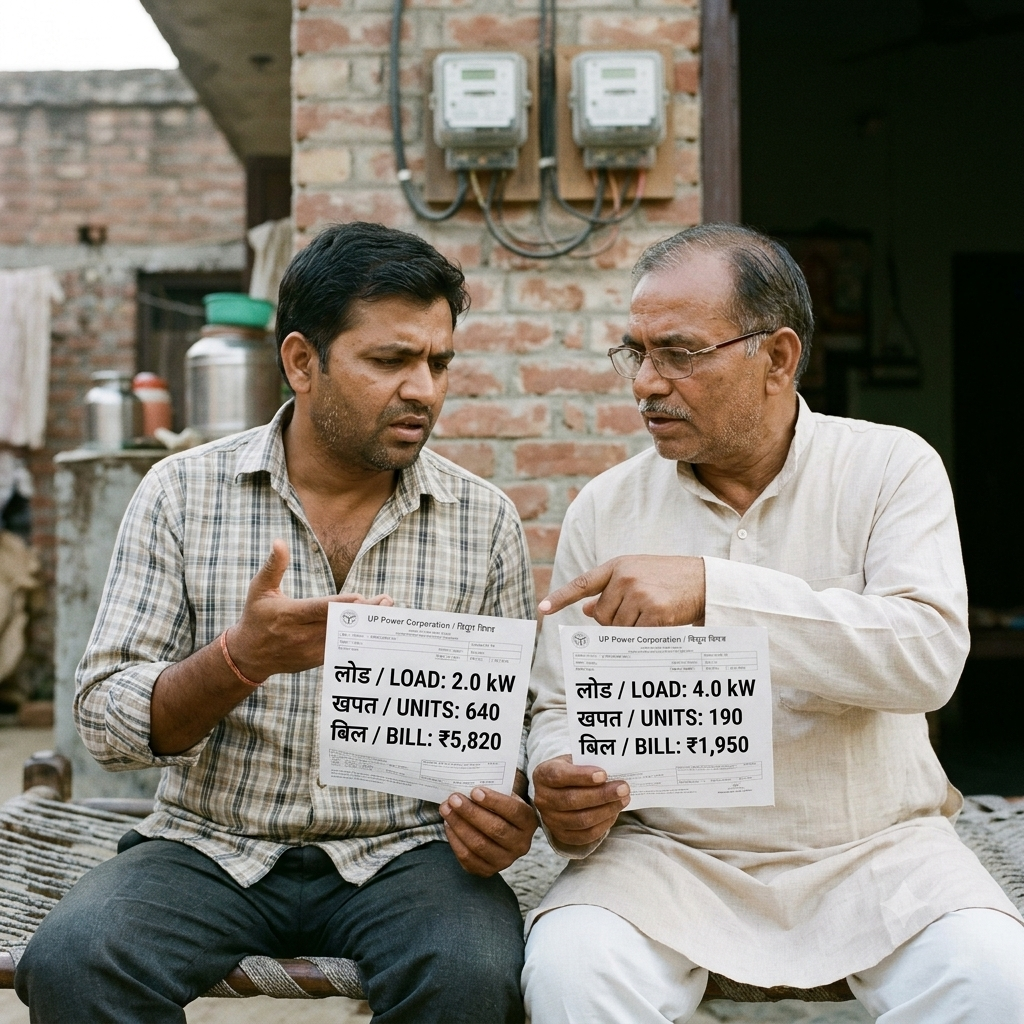
चिंटू का हाल: पड़ोसी का कनेक्शन 4 किलोवाट का, चिंटू का सिर्फ़ 2 किलोवाट का, फिर भी चिंटू का बिल ज़्यादा आया। चिंटू मेरे पास आकर बोला, "मीटर भैया, ये तो सरासर अन्याय है!" मैंने कहा, "बैठ जा, चाय पी, और सुन। पहले किलोवाट और यूनिट का फ़र्क़ समझ ले, बीपी बाद में बढ़ाना।"
1. किलोवाट (kW) क्या है? कनेक्शन का इंजन
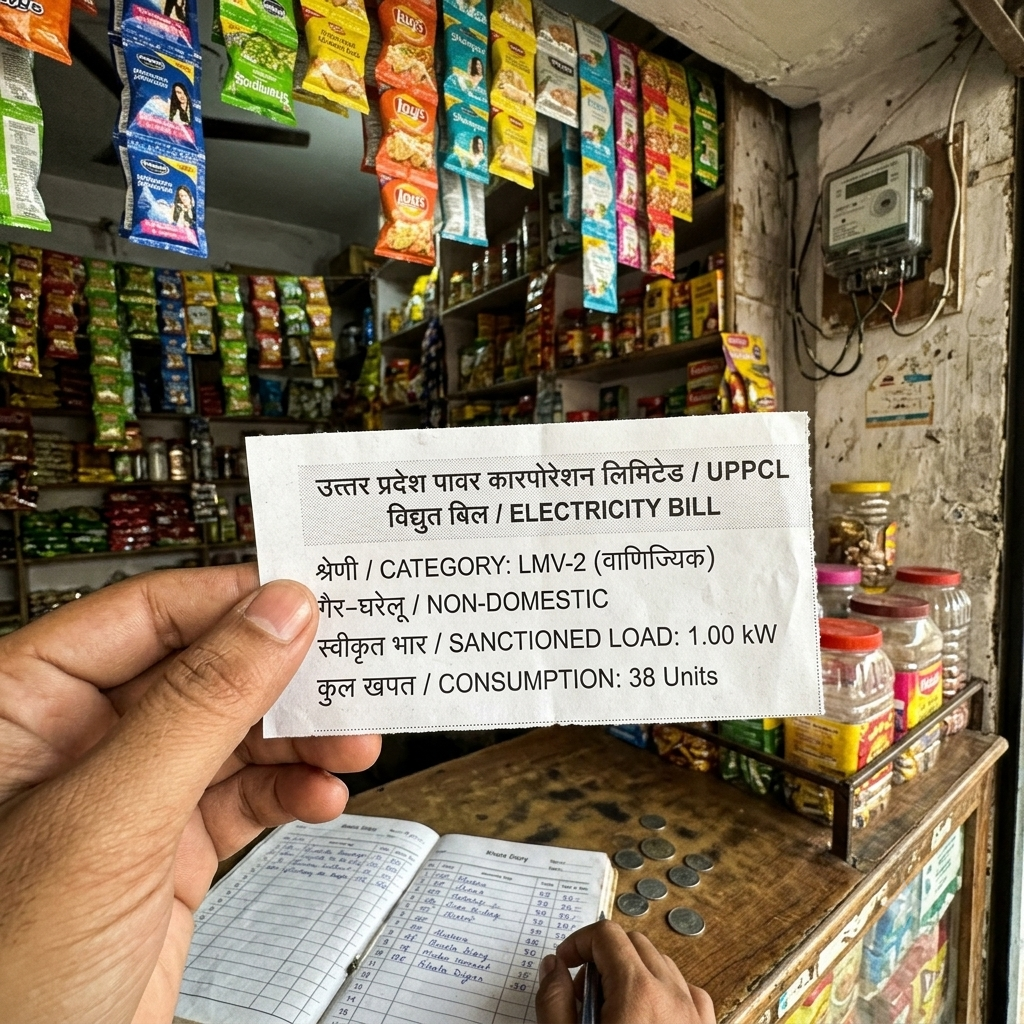
बिल पर जो स्वीकृत भार (kW) लिखा होता है, वो आपके कनेक्शन की क्षमता है। मतलब ये कि आपका कनेक्शन एक साथ कितनी बिजली खींचने के लिए मंज़ूर है।
सोचो गाड़ी का इंजन कितना ताकतवर है। 4 kW वाला मतलब बड़ा इंजन, 2 kW वाला मतलब छोटा इंजन। पर इंजन कितना ताकतवर है, इससे पेट्रोल का खर्चा तय नहीं होता। पेट्रोल का खर्चा तो इससे तय होता है कि गाड़ी कितनी चली।
2. यूनिट क्या है? बिजली की असली गिनती
1 यूनिट = 1 kWh = 1 किलोवाट का उपकरण 1 घंटा चला।
- 1000 वॉट का हीटर 1 घंटा चला = 1 यूनिट
- वही हीटर 2 घंटे चला = 2 यूनिट
- 2 किलोवाट का गीजर 1 घंटा चला = 2 यूनिट
यानी यूनिट = ताकत × समय। ऊर्जा प्रभार (एनर्जी चार्ज) इन्हीं यूनिट के हिसाब से लगता है।
3. गुप्ता जी का हिसाब
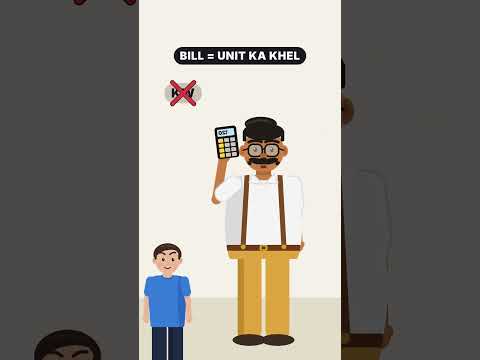
मोहल्ले के गुप्ता जी ने चिंटू को कैलकुलेटर पकड़ाकर कहा, "बिल का असली खेल यूनिट का है, किलोवाट का नहीं।" फिर उन्होंने ये मिसाल दी:
- चिंटू: कनेक्शन 2 kW का, पर रोज़ गीजर और हीटर खूब चलते हैं।
- पड़ोसी: कनेक्शन 4 kW का, पर रात को सिर्फ़ पंखा चलता है।
अब चिंटू के गीजर का हिसाब:
- 2 kW का गीजर × 1 घंटा = 2 यूनिट
- रोज़ 2 घंटे चले = 4 यूनिट रोज़
- 4 यूनिट × 30 दिन = लगभग 120 यूनिट महीने में
और पड़ोसी का पंखा (मान लो 75 वॉट, रोज़ 10 घंटे): 0.075 kW × 10 घंटे = 0.75 यूनिट रोज़, यानी महीने में करीब 22 यूनिट। इसीलिए बड़ा कनेक्शन होने पर भी पड़ोसी की यूनिट कम जलीं, और चिंटू की ज़्यादा।
4. तो क्या किलोवाट का बिल से कोई लेना-देना नहीं?
है, पर दूसरे तरीके से। बिल में दो हिस्से याद रखो:
- ऊर्जा प्रभार: यूनिट (kWh) के हिसाब से। जितनी खपत, उतना पैसा।
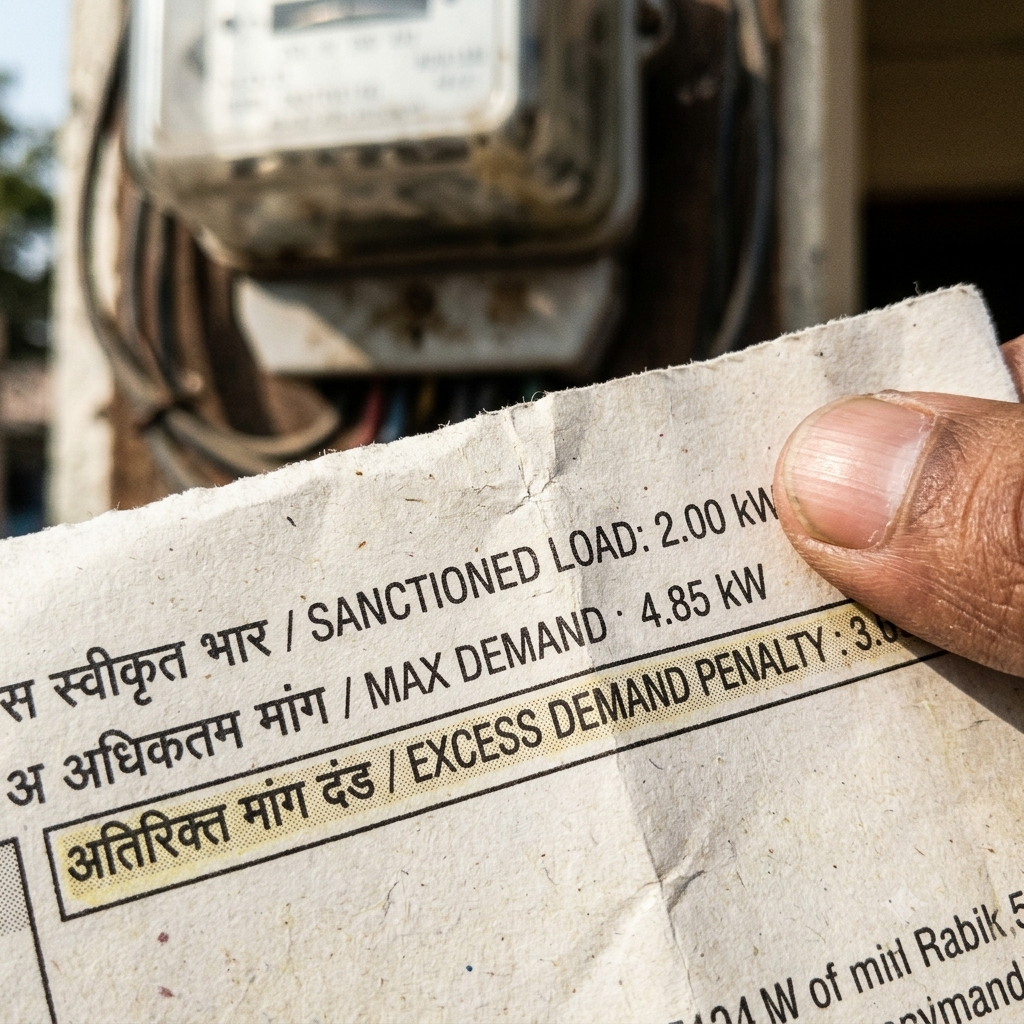
- मांग या फिक्स्ड चार्ज: किलोवाट के हिसाब से। इसका पैसा बिजली कम चले या ज़्यादा, लगता ही है। एक असली बिल में यह 6.92 kW पर 110 रुपये प्रति kW लगा था। (उसी बिल को हमने पिछली पोस्ट "बिजली बिल कैसे पढ़ें" में समझाया है।)
तो बड़े कनेक्शन पर फिक्स्ड चार्ज ज़्यादा लगता है, टैरिफ़ के हिसाब से। पर बिल का बड़ा हिस्सा आम तौर पर यूनिट वाला ही होता है, इसलिए खपत कम करना ही असली बचत है।
5. एक छोटा सा नमूना हिसाब
नीचे सिर्फ़ समझने के लिए एक अंदाज़ा है। इसमें उसी असली बिल (अक्टूबर 2026, घरेलू) के जैसे स्लैब और 110 रुपये प्रति kW का फिक्स्ड चार्ज लिया है। इसमें FPPA, विद्युत कर और बाकी चार्ज शामिल नहीं हैं। आपके बिल की दरें अलग हो सकती हैं।
देखा? कनेक्शन आधा होने पर भी चिंटू का बिल ज़्यादा, क्योंकि यूनिट ज़्यादा जलीं।
6. चिंटू क्या करे? पैसे बचाने के आसान तरीके
- गीजर पर टाइमर लगाओ। नहाने से 15 से 20 मिनट पहले चालू करो, फिर बंद। पूरे दिन चालू मत छोड़ो।
- गीजर का थर्मोस्टैट पानी गर्म होने पर बिजली काट देता है, इसलिए असली यूनिट 2 घंटे के हिसाब से कम भी हो सकती हैं। फिर भी टाइमर से अपने आप बंद होना सुरक्षित है।
- हीटर के घंटे गिनो। 1 kW का हीटर एक घंटा = 1 यूनिट।
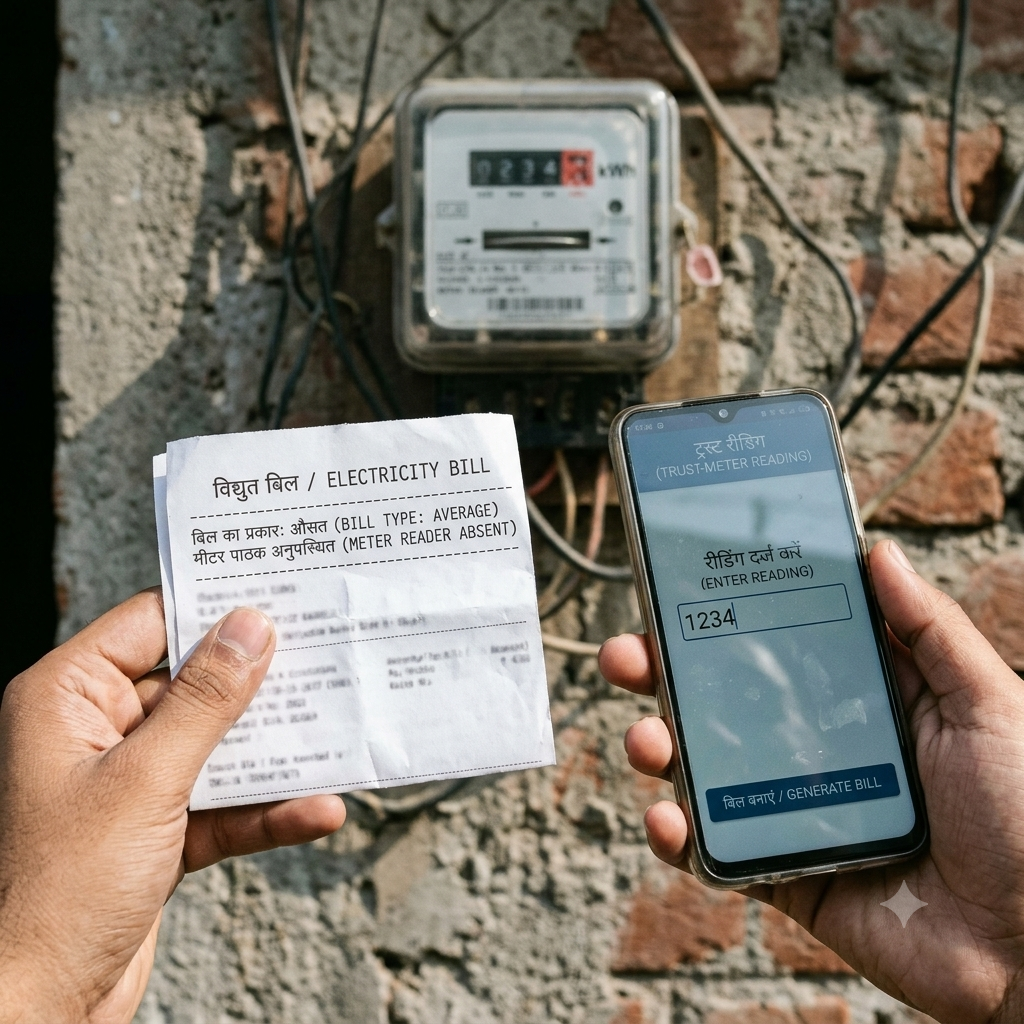
- बिल की यूनिट और मीटर की रीडिंग मिलाते रहो। मीटर की फोटो लेकर रखो।
7. याद रखो
- kW = कनेक्शन की क्षमता (स्वीकृत भार)।
- यूनिट (kWh) = असली खपत।
- बिल यूनिट देखकर समझो, सिर्फ़ किलोवाट देखकर नहीं।
- फिक्स्ड चार्ज kW पर लगता है, इसलिए ज़रूरत से बड़ा लोड मत रखवाओ।
याद रखें: दरें, स्लैब और फिक्स्ड चार्ज आपकी श्रेणी, भार और समय के हिसाब से बदल सकते हैं। ऊपर के आँकड़े सिर्फ़ उदाहरण हैं। अपनी श्रेणी की ताज़ा दरें UPERC के टैरिफ़ आदेश और अपने बिल से मिला लें। यह आधिकारिक UPPCL वेबसाइट नहीं है, केवल जानकारी के लिए है, कानूनी सलाह नहीं। शिकायत या सवाल के लिए 1912 पर बात करें।
Here is Chintu's story: the neighbour has a 4 kW connection, Chintu has only 2 kW, yet Chintu's bill came out higher. He came to my chaupal shouting "Meter Bhaiya, this is plain injustice!" I told him, "Sit down, have some tea, and listen. First learn the difference between kilowatt and unit. Raise your blood pressure later."
1. What is a kilowatt (kW)? The engine of your connection
The sanctioned load (kW) printed on your bill is the capacity of your connection: how much power it is approved to draw at the same time.
Think of a car engine. 4 kW is a bigger engine, 2 kW a smaller one. But the size of the engine does not decide your petrol bill. How far you actually drove does.
2. What is a unit? The real count of electricity
1 unit = 1 kWh = a 1 kW appliance running for 1 hour.
- A 1000 W heater running for 1 hour = 1 unit
- The same heater for 2 hours = 2 units
- A 2 kW geyser for 1 hour = 2 units
So a unit is power × time. The energy charge is calculated on these units.
3. Gupta Ji's calculation
Gupta Ji from the neighbourhood handed Chintu a calculator and said, "The real game of the bill is units, not kilowatts." Then he gave this example:
- Chintu: 2 kW connection, but the geyser and heater run a lot every day.
- Neighbour: 4 kW connection, but only a fan runs at night.
Chintu's geyser:
- 2 kW geyser × 1 hour = 2 units
- Running 2 hours a day = 4 units a day
- 4 units × 30 days = about 120 units a month
The neighbour's fan (say 75 W for 10 hours a day): 0.075 kW × 10 hours = 0.75 units a day, about 22 units a month. That is why the neighbour burned fewer units despite the bigger connection, and Chintu burned more.
4. So does kW have nothing to do with the bill?
It does, in a different way. Remember the two parts of a bill:
- Energy charge: based on units (kWh). More consumption, more money.
- Demand or fixed charge: based on kilowatts. You pay it whether you use little or a lot. On one real bill it was Rs 110 per kW on 6.92 kW. (We explained that bill in the earlier post "How to Read Your Electricity Bill".)
So a bigger connection means a higher fixed charge, as per the tariff. But the larger part of a bill is usually the unit-based part, so reducing consumption is where the real saving is.
5. A small sample calculation
This is only an illustration. It uses slab rates like those on that real bill (October 2026, domestic) and a fixed charge of Rs 110 per kW. It leaves out FPPA, electricity duty and other charges. Rates on your bill may differ.
See? Half the connection, yet Chintu's bill is higher, because more units burned.
6. What should Chintu do? Easy ways to save
- Put a timer on the geyser. Switch it on 15 to 20 minutes before your bath, then off. Don't leave it on all day.
- A geyser's thermostat cuts power once the water is hot, so real units can be lower than the 2-hour estimate. A timer that switches it off by itself is still the safer habit.
- Count heater hours. A 1 kW heater for an hour = 1 unit.
- Compare billed units with your meter reading, and keep a photo of the meter.
7. Remember
- kW = capacity of the connection (sanctioned load).
- Unit (kWh) = actual consumption.
- Read your bill by units, not by kilowatts alone.
- Fixed charge is levied on kW, so don't keep a load larger than you need.
Please note: rates, slabs and fixed charges can vary with your category, load and time. The figures above are examples only. Check your category's latest rates against the UPERC tariff order and your own bill. This is not the official UPPCL website and is for information only, not legal advice. For complaints or questions, call 1912.
Sources
- Units are kilowatt-hours (kWh): energy = power x time. Analog Devices, Smart Metering Technology Promotes Energy Efficiency:
- https://analog.com/en/analog-dialogue/articles/smart-metering-tech-promotes-energy-efficiency.html
- Sanctioned load, billed demand, demand (fixed) charge per kW and slab-wise energy charge: an actual UPPCL bill (Oct 2026, LMV-1 domestic) explained in the earlier post how-to-read-electricity-bill
- Check your own category's current rates in the latest UPERC tariff order and on your bill:
- https://www.uppcl.org
- Helpline 1912 (24x7, toll free)